Physical Address
304 North Cardinal St.
Dorchester Center, MA 02124
Physical Address
304 North Cardinal St.
Dorchester Center, MA 02124


Gardening is no longer an activity meant for those who have large spaces or spacious outdoor areas; however, it is one that promises to be very fulfilling and can be practiced even in the tiniest of indoor spaces. This is where the indoor raised garden bed comes in: a very convenient option that changes narrow places into immensely beautiful, fertile gardens. Whether you live in an apartment, are a busy city worker, or just want to start small, this post is going to talk you through the positives and uses of indoor raised garden beds. We are going to cover topics such as growing your own fresh herbs as well as developing a quiet green spot in your home, all the while showing you how to make optimal use of the space, grow healthy plants, and have a lot of fun with indoor gardening. Prepare to dive into the basics of small space gardening and see for yourself how easy it is to get nature inside!

Indoor raised beds are the best way to bring gardening indoors as they are the most functional and chic. With the help of elevated gardening containers, you can grow plants efficiently and in a small space, which is otherwise not possible, especially for urban homes with little to no garden to speak of. These beds act as space savers while at the same time providing the user with a greater degree of control in terms of soil quality, water drainage, and the management of pests. A vast majority of the indoor raised garden beds are portable, hence they can be easily relocated and adapted to light and space changes. The choice of material for the house planter might be a wooden, fabric, or plastic bed that is perfectly suited for herbs, vegetables, or small fruits, or other ornamental plants.
There are numerous advantages to using raised garden beds for gardeners with any level of expertise. One of the advantages is that they improve soil drainage, thus solving the waterlogging issue and resulting in healthier root growth. Also, the enclosed garden area with raised beds generally has fewer weed implications and allows more effective pest control. In addition, using raised beds can also help alleviate back and knee discomfort, thus making gardening a more feasible and convenient form of physical activity. Furthermore, the roots of the plants need to be buried in the soil and the bed will have the right environment and the proper support for the plants. Above all, they are a quick, easy, and effective way to grow all kinds of plants whether they are used inside or outside.
In a variety of styles, indoor garden planters are made to specifically cater to the requirements and preferences of their buyers. The best planters for those people who might do not have time for watering on a regular basis are self-watering planters. By this method, the plants are always kept moist all the time. Hanging planters save space and are a great option for the rooms with small spaces. Like hanging planters, wall planters can also be hung to the wall and be used for vertical gardening with medicinal herbs, any kind of flowers or succulents care. Last but not least, traditional pots made of the well-known materials, such as clay, ceramic, and plastics, are great for most kinds of plants and come in a variety of sizes to fit different spaces. Moreover, hydroponic planters are great for the new trend of indoor gardening, especially if one does not like the process of planting in the so-called traditional way. They all turn out to be very effective in the gardening process, and are all attractive, and plant pots are the name of indoor garden planters.
The success of your indoor garden is a function of selecting the appropriate soil. Potting soil that is well-draining and at the same time retains water is preferred for most indoor plants. The best alternative for such plants is usually to use a mix that respects the specific requirements, for example, cacti and succulents, which are in need of a sandy, quick-draining soil, or tropical plants that usually do better with a more organic, nutrient-rich mix. On the other hand, if you use garden soil, it will be too heavy for indoor pots and may also contain pests or diseases. To improve aeration and moisture retention, you can also add perlite, vermiculite, or peat moss to the soil if required. Always consider the specific needs of your plants and choose the appropriate soil in order to ensure the health of your plants and their lush growth.
To get the indoor raised garden ready, start by finding a place that is well-lit naturally or make sure it can be lightened with the help of grow lights. Opt for the raised garden bed that will fit in your space, the elevated planters or container boxes are great options to use indoors. Load the bed with a potting mix that is right for the types of plants you are going to grow. Just group the plants that have the same lights and water requirements together and you will have less work in taking care of them. Always monitor the humidity of the soil, make sure there is proper drainage, and apply fertilizer if necessary to encourage healthy plants. Also, be sure to do the regular upkeep tasks like reshaping and controlling the insects so that your indoor garden remains healthy.
DIY raised garden bed kits are a fantastic way to have a garden with the cheapest cost and without a lot of work for tools. They usually come with pre-cut materials, very simple assembly instructions, and everything else required to put them together. These are offered in all sizes and different materials, such as wood, metal, or even composite, thus giving the possibility to select one that fits your space and personal taste. Most of the kits are constructed in such a way that even novices will find them to be very user-friendly. Once set up, these beds will accept filling with topsoil that is rich in nutrients. The soil can then be used to cultivate any kind of plants, like flowers, herbs, veggies etc., thus offering an easy and efficient way to engage in gardening at home.
Metal raised beds are the number one choice for those gardeners who think that garden could use a new look and these beds are very strong, can withstand any weather and look amazingly modern and sleek in any garden. Metal raised beds can be found in a lot of different sizes and shapes which makes them very flexible as far as fitting your garden layout and style. Also, setting up and maintaining the metal raised beds are very simple, and hence they are suitable not only for other gardeners but for all kinds of gardens. The other advantage is that the strong construction provides more resistance and at the same time does not cause any change in size and quality of the material, therefore, the bed will last longer. When using metal raised beds, gardeners can transform the planting area into an organised and beautiful space and besides enjoying soil drainage and temperature regulation as benefits.
Growing indoor plants in a proper way requires good drainage as the water pooling at the bottom of the pots is prevented, and root rot can be caused by that. The first step to make the drainage system effective is to have holes in the planters so that the excess water can leave the pot and the soil reaches a balance. For planters with no holes, putting a layer of pebbles or activated charcoal at the bottom might be the solution to assist in the flow of water and reduce the accumulation of moisture. Besides, the use of a planter with a punctured inner pot or saucer for the removal of extra water is one of the options. Overwatering of the plants is the most common cause for root rot, that is why you should always be checking the level of soil moisture and provide water only when needed, hence, giving your indoor plants a healthy habitable environment.

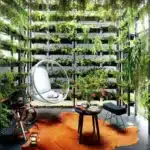
Make use of vertical areas to the maximum by installing wall-mounted planters, shelving, or hanging baskets. Through this method, both the floors and the countertops will remain clear so you can create a spectacular green exhibition.
The choice of plants for confined areas can be cacti, herbs, or simply the small form of a normal plant, e.g. miniature roses.
The choice of compartmentalized furniture containing planters is always welcome albeit one can adopt window sills, kitchen tops, and the corner spaces for maximum utilization.
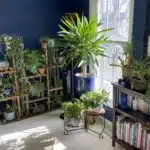
The best way to make plants more appealing is to put them in groups or “arrived” them. This procedure will create an impact, save some space, and at the same time, by grouping the kind of plants with the same light and water needs, one will be able to manage them better.
Move your plants close to the window or make use of the grow lights in the areas where there is no natural sunlight to make sure that they grow luxuriantly.
These methods will allow you to use your space in a new way and come up with plants that cover even the smallest area in a beautiful green carpet.
Growing plants vertically is an excellent solution to save space, especially in the case of small sizes. At the same time, climbers such as tomatoes, peas, and beans can benefit from the sturdy support of trellises, leading them to grow upward rather than taking up too much horizontal space. This in-turn guarantees not only a huge saving in space but also lets the air circulate freely around the plants which in-turn reduces the risk of diseases. For the purpose of securing the trellis, ensure that it is firm, and plant varieties that are best for this growing method. Another thing to consider is that combining trellis systems with companion planting can increase productivity and provide a minimalistic and visually attractive garden layout.
Stackable planters are certainly a great and even the best option for gardeners who wish to be efficient in a little space. These plant crates have a multifaceted structure that not only allows vertical planting but also nonetheless prevents the crates from falling over making them outstanding for gardens, patios, small porches, verandas, or even walls. They can hold a lot of plants, and enable easy access to all the plants with just one direction of a watering can, in addition to being herbs, strawberries, and flowers. On the other hand, the use of plant crates may have the opposite effect on the height of the garden while keeping the growth of plants high. Habitually, they come with trolleys and are most frequently made of steel or plastic, which serves a double function. Moreover, it is a common practice to use lightweight materials and incorporate drainage systems for healthy root development in stackable planters, hence these are a smart choice for every gardener
Self-watering planters come to the rescue of gardeners who are always short of time, ensuring that the plants get the water they need while the gardeners themselves need not spend so much time and effort. These planters stand out for having a container within their structure that acts as a reservoir and guarantees a steady water supply for the plants, thus avoiding overwatering or underwatering. Through this system, plants will be able to draw water only as the requirement arises; therefore, watering manually will become less regular. There will be also no need for a person to water the plants every day if she or he will be on vacation or away from home for one or two weeks. On the other hand, the self-watering planters are available in different sizes and designs so as to be a perfect fit, in terms of both the plant types and the aesthetics, thereby rendering them as a very versatile choice for both indoor and outdoor gardening.

Begin by picking the most suitable plants for the indoor garden by taking into account sunlight, space, and maintenance factors. Create a proper drainage system and apply a high-quality potting mix to your pots to prevent waterlogging from happening. Provide your plants with the right amount of light by placing them near the windows or under artificial grow lights if the illumination is scarce. Watering should be done on a regular basis but make sure that the soil is not overly wet; always check the moisture of the soil first before applying the water. At last, it is important to remove dust from the leaves and trim them from time to time for the plant to grow healthily and to eliminate dead or yellow leaves. Your indoor garden will thrive with proper care and attention.
Starting seeds indoors is truly a pleasurable yet involved activity as the seeds need complete care to germinate and grow successfully. The first step is to choose your seeds of top quality and ailing the right pots, such as seed trays or small pots with holes for water drainage. The earth that is a lightweight mix like seed-starting soil and is fine, as it gives a proper healthy diet and a proper mixture that is easy for the young plants to grow. And sow the seeds according to the deepness recommended on the seed packet, usually two to three times the diameter of the seed. To maintain dampness consistently, spray the soil lightly and cover the containers with a transparent plastic dome or wrap tightly to form a pleasantly wet environment. The containers should be kept in a place that has a temperature of 65°F to 75°F and light, either a sunny window or under the grow lights for 12-16 hours per day. After the seedlings come out, take off the cover, leave some space between the plants to prevent them from being too close, and splash water carefully to prevent the attack of fungus-like bacteria. Gradually, adjust the plants to the outdoor climate before finally relocating to the final area.
It’s very important to get the right amount of water when watering indoor raised beds in order not to over or under water the plants. Do the simple test of your soil’s wetness by putting your finger an inch deep into the soil; water the plant only in case it feels dried out at that particular depth. The plants won’t be surprised by the water if you use room-temperature water also give them time to absorb more evenly by watering slowly. Make sure your bed has good drainage because waterlogging can cause the roots to rot. Moreover, consider using a narrow-spouted watering can or drip irrigation system for more precise delivery of water and hence less splash on the leaves of the plants which is a common cause of disease. Always change the watering schedule according to the needs of the plants, humidity, and temperature and also in the indoor environment.
Grow lighting remains a great way to make sure that plants get the right spectrum of light and thrive inside when they do not have enough natural light. However, one should know how to make the most of them. To do so, the right type of light should be selected according to the plants’ individual requirements, for example, full-spectrum LED grow lights may work fine for the whole range of species. The lights should be positioned around 6 to 12 inches above the plants so that the heat-producing effect is lessened while at the same time enough light is reaching the plants. A timer can be used to provide the plant with the light conditions they are used to i.e. 12 to 16 hours light per day which is usually the case, depending on the plant species. Regular inspection of the plants for either the one extreme of too much light and the other one of too little light sign such as scorched leaves or leggy growth, and then adjusting the distance or the duration has to be done. It is critical that you use them constantly if you want your plants to become healthy and grow well and more quickly.

To harvest your indoor garden, the first step is to pick fruit, vegetables, or herbs when they are ready for picking or have reached the right size, as shown on the seed packages or plant care labels. Use sharp, clean scissors or pruning tools to cut your plants, ensuring there’s no harm to the plants. If you want to keep the plants producing for a longer period, only take off the parts that you are going to use and allow the rest of the plant to grow. Wash your produce thoroughly and then either enjoy your fresh veggies and fruits or try out your favorite recipes with them. Not only will you have the advantage of always having the freshest of ingredients but you will also be contributing to the conservation of the planet by cultivating and utilizing your indoor garden.
It is feasible to grow herbs and vegetables in a limited space with only a little bit of ingenuity and forethought. The first thing that you should do is choose and for your restricted areas some that are compact or dwarf varieties like basil, parsley, lettuce, or cherry tomatoes, all of which are good for limited areas. The use of such vertical gardening tools like wall-mounted planters, hanging baskets, and multi-tiered shelving is a very innovative and simple way to get the most out of the space you have. The next main thing is to give the plants enough light by placing them close to a sunny window or by the use of grow lights. The water supply is also critically important, considering this fact as it is also the factor that depends on the used set-up and may lead to problems around plants if not properly controlled. The smallest area imaginable can become a garden with the help of all other methods for garden improvement that have been mentioned and which bring into our view the fact of how efficient and lively a garden can be.
To simulate a greenhouse effect inside, first, build an atmosphere that is warm and humid, which is suitable for your plants. Use plastic covers that are clear, glass boxes, or the kits that are intended for making a greenhouse for heat and moisture capture, which is done effectively. Inclusion of the small openings or the vents that altogether provide the necessary ventilation is very important to mitigate the growth of mold and mildew. The perfect place for attaining sufficient natural light is where the setup is located or use grow lights as supplementary to give the plants sunlight. Be sure to conduct the temperature and humidity checks from time to time and on a regular basis thus keeping them at the same level to encourage the growth of plants. It is very possible for you to have a well-maintained indoor garden that is healthy with these steps.
Homegrown fruits and vegetables, as an origin, are an opportunity to approach the process in an imaginative way in the kitchen and more. After you reap the benefits of your work by creating fresh salads,–smoothies, and the like, then work from the point of view of the cooking, tomatoes, splitting, and making homemade sauces that are so good they are bursting with flavor. You get the most during the entire year if you preserve your crops by canning, pickling, or drying them. Besides, the herbs will not only be an ornament to your garden but could also end up as an ingredient for an infusion, pesto or even a cleaning solution. Moreover, the place you turned into a home garden could be the source of raw materials that could fuel home-made items such as herbal sachets, skin-care and luxurious interior decoration projects. By mere inclusion, daily products could serve the purpose and, hence, the need to buy less, save more, and inject identity into one’s domestic life.
Bountiful Indoor Garden: This article discusses the concept of indoor raised beds, including self-watering container systems and their ability to grow herbs, lettuce, tomatoes, and peppers indoors. Read more here.
Albo Pepper: A detailed tutorial on designing self-watering planters or raised beds, which are ideal for indoor gardening. It explains the use of sub-irrigated planters (SIP) with water reservoirs. Explore the guide here.
My Little Green Garden: This source highlights the benefits of raised bed gardening, such as weed prevention and better soil management, which are applicable to indoor setups as well. Learn more here.
Absolutely, a perfectly set up indoor raised bed or planter box can contribute to the provision of fresh vegetables, flowers, and herbs. To enjoy such a setup, you’ll need to use the right soil, a good number of drainage holes, and place the grow light properly. Gardeners have two options for this — either use a raised bed kit or make a DIY planter box on a cart or a garden bed stand that sits high enough to allow for the best possible light and airflow conditions for the plants. Self-watering or wicking systems and a liner may also be used to aid in the even supply of moisture and decrease of watering frequency. For those of you who might be looking to have a superb indoor garden and still wouldn’t mind the bugs to take care of, you are better off with a cedar or metal raised garden bed kit. The preventive measures other than the above involve providing plants with light, having a balanced fertilizer program, and keeping a watchful eye on all pests and diseases, which can be done by any gardener, either a novice or experienced, in order to maintain the garden’s productivity and wellbeing.
Good drainage is a must in raised garden bed, a planter pot, or a fabric pot if they are used for indoor plants; this can aid in avoiding root rot and mold. Create holes for drainage by drilling or ensuring a waterproof liner is there in the planter boxes and tray systems, then put some coarse material to increase the capacity for draining and finally add soil and compost. Think of using planter designs that allow for water to be wicked or self-watering; also think if it is possible to get a self-watering system or a water kit that works with a reservoir while not making the topsoil saturated. When it comes to elevated garden beds or metal raised garden beds, you may use a tray or a cart to protect the floor and should make sure that they are rust and corrosion-resistant for long life. A moisture meter will be a great method to observe the soil and you may have to make watering changes and fertilizer adjustments as per the need of the plants to have a healthy crop of vegetables and herbs.
You would require a seed-starting mix, trays or small pots, a grow light, and clear instructions from a raised garden bed kit or DIY plan (in case you are using a modular planting bed) while assembling seeds in a planter box or a tray. Start the germination process in a greenhouse or humidity dome and provide adequate light by using a trolley or an elevated planter shelf to move the seedlings as they grow. Roots will remain moist all the time and will unde up suffocating seeds if they are too wet. To this end, a self-watering tray or a wicking mat will help you in this regard. A fine feed at a mitigated strength will encourage the growth in its initial phase. Go for the compact varieties for the indoor garden and move them to bigger pots or wooden beds with proper drainage holes when the roots completely fill the cells in the starting tray. Label the seed trays and keep them free from any impurity to minimize the risk of pests and diseases and to allow the plants to get established.
A raised garden bed or a cart is an example of a planter pot that would raise ergonomics for gardeners, get drainage to work better and also make it hard for pests to access the plants from the floors. The main advantage people are not usually aware of and which makes the garden a really versatile one is that you can have it in a patio or in a living room or wherever you want. Garden beds that are elevated and carts can facilitate the use of modules in raised bed garden kits, thus making it very easy to build and reconfigure planting beds without bothering with the heavy lifting. Elevating makes air flow better under the wooden or metal beds thus making the problems of rot and rust and corrosion less, hence increasing the life span of an example that is durable in one way. In a case of space shortage, stackable planter boxes or a modular system are always ready to do their best in the multiplication of planting beds vertically, while the use of grow lights can make sure the light is evenly distributed. Always choose waterproof liners and materials such as cedar or powder-coated metal that are both durable and safe for indoor use over the long term.